

If your business is not on the Internet, then your business will be out of business.” – Bill Gates.
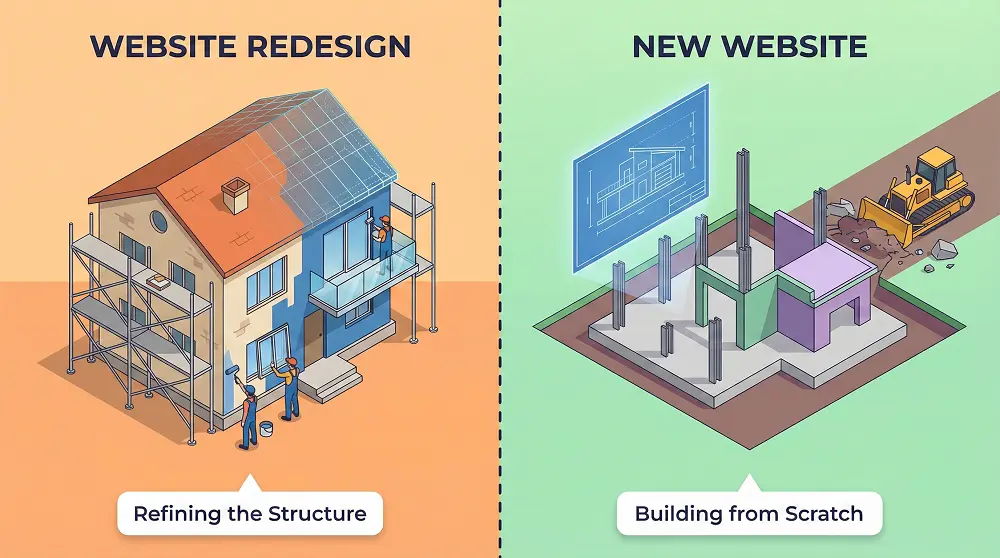
Having your business online and creating digital revenue streams has never been more essential. This guide will take you through the essential steps to build a website that not only attracts visitors but also converts them into paying customers. We’ll cover key trends like AI-powered personalization, voice search optimization, and mobile-first design, along with proven monetization strategies such as subscription services and digital product sales. With the right strategies, your website can become a powerful tool for long-term revenue growth.
Let’s explore how to build a website that truly makes money in 2026.
Understanding the Importance of a Profitable Website in 2026
Your website serves as your business’s digital headquarters. It operates 24/7, reaching customers across time zones and generating revenue while you sleep. Unlike traditional brick-and-mortar businesses, a well-designed website can scale infinitely without proportional increases in overhead costs.
The global shift toward digital-first experiences has accelerated since 2020. Consumers now expect seamless online interactions, whether they’re purchasing products, booking services, or seeking information. A profitable website meets these expectations while creating multiple revenue streams for your business.
Consider the compound effect of website profitability. A site earning $1,000 monthly today can grow to $10,000 monthly within two years through optimization, content expansion, and strategic marketing. This scalability makes website investment one of the highest-return activities for modern businesses.
Key Trends Shaping Website Profitability in 2026
Several technological and behavioral shifts are redefining how profitable websites operate:
AI-Powered Personalization transforms user experiences by displaying relevant content, products, and offers based on visitor behavior. Websites using AI personalization report 15-20% increases in conversion rates.
Voice Search Optimization becomes crucial as smart speakers and voice assistants handle 50% of all searches. Profitable websites now optimize for conversational queries and featured snippets.
Interactive Content Experiences engage visitors longer and drive higher conversions. Calculators, quizzes, polls, and interactive tools keep users on-site while collecting valuable data.
Subscription-Based Models continue growing across industries. From software to content to physical products, recurring revenue models provide predictable income streams.
Mobile-First Design reaches beyond responsiveness. With mobile traffic comprising 60% of web visits, profitable sites prioritize mobile user experience above desktop.
Sustainability Features attract environmentally conscious consumers. Websites highlighting eco-friendly practices, carbon-neutral hosting, and sustainable business models gain competitive advantages.
Trends in Website Success Strategies
| Trend | Description | Benefits | Source |
|---|---|---|---|
| Recurring Revenue Models | Businesses adopting subscription-based or membership services to ensure steady income. | Predictable income, customer retention, and scalable growth. | Forbes |
| Mobile-First Design | Designing primarily for mobile users to enhance engagement and usability. | Increased traffic, higher search rankings, and improved user satisfaction. | Statista |
| Sustainability Features | Incorporating eco-friendly hosting and emphasizing sustainable practices on websites. | Attracts eco-conscious consumers, competitive differentiation, and positive brand image. | EcoBusiness |
This chart synthesizes important strategies for creating a competitive online presence, helping business owners focus on effective, modern trends.
Choosing the Right Business Model for Your Website
Your business model determines how your website generates revenue. Select the approach that aligns with your skills, audience, and long-term goals:
E-commerce Sites sell physical or digital products directly to consumers. This model works well if you have products to sell or can source inventory. Popular niches include health supplements, home goods, and digital courses.
Service-Based Websites promote professional services like consulting, design, or coaching. These sites focus on lead generation and typically feature portfolios, testimonials, and booking systems.
Content Monetization generates revenue through advertising, sponsorships, and affiliate marketing. This model suits writers, creators, and subject matter experts who can produce valuable content consistently.
Membership Sites charge recurring fees for exclusive content, communities, or tools. This model creates predictable revenue but requires ongoing content creation and community management.
Marketplace Platforms connect buyers and sellers while taking transaction fees. These sites require significant traffic and network effects to become profitable.
Software as a Service (SaaS) provides web-based tools or applications for monthly or annual fees. This model offers high profit margins but demands technical expertise.
Optimizing User Experience (UX) for Maximum Conversions
Exceptional user experience directly correlates with profitability. Visitors who can easily navigate your site, find information quickly, and complete desired actions become paying customers.
Page Speed Optimization remains fundamental. Websites loading in under three seconds retain 70% more visitors than slower sites. Compress images, minimize code, and use content delivery networks (CDNs) to boost performance.
Intuitive Navigation guides visitors through your content logically. Use clear menu structures, internal linking, and breadcrumbs to help users find what they need without frustration.
Mobile Responsiveness ensures your site functions flawlessly on all devices. Test your website on various screen sizes and optimize touch interactions for mobile users.
Clear Value Propositions communicate your unique benefits immediately. Visitors should understand what you offer and why they should choose you within five seconds of landing on your site.
Strategic Call-to-Actions (CTAs) prompt visitors to take profitable actions. Use contrasting colors, action-oriented language, and strategic placement to maximize click-through rates.
Trust Signals build confidence in your business. Display customer testimonials, security badges, certifications, and contact information prominently throughout your site.
Effective Monetization Strategies: Ads, Products, and Services
Diversifying revenue streams protects your business from market fluctuations while maximizing earning potential.
Display Advertising generates passive income from website traffic. Google AdSense and Media.net offer beginner-friendly options, while direct advertiser relationships provide higher rates for established sites.
Affiliate Marketing earns commissions by promoting other companies’ products. Choose affiliates that align with your audience’s interests and maintain transparency about sponsored content.
Digital Product Sales offer high profit margins since they don’t require inventory or shipping. E-books, online courses, templates, and software tools appeal to various audiences.
Physical Product Sales work well for niche markets with specific needs. Consider dropshipping to minimize upfront investment or create custom products that showcase your expertise.
Service Offerings leverage your skills and knowledge directly. Consulting, coaching, design services, and done-for-you solutions command premium prices.
Subscription Models provide recurring revenue through newsletters, membership sites, or software access. Start with free content to build trust, then offer premium features for paying subscribers.
Sponsored Content allows brands to reach your audience through partnerships. Maintain editorial integrity while creating valuable content that serves both your readers and sponsors.
Leveraging SEO and Content Marketing to Drive Traffic
Organic search traffic provides the foundation for long-term website profitability. Unlike paid advertising, SEO efforts compound over time, delivering increasing returns on investment.
Keyword Research identifies terms your target audience searches for. Use tools like Ahrefs, SEMrush, or Google Keyword Planner to find profitable keywords with manageable competition.
Content Strategy should address your audience’s problems while showcasing your expertise. Create comprehensive guides, tutorials, case studies, and industry insights that provide genuine value.
On-Page Optimization helps search engines understand your content. Use descriptive titles, meta descriptions, header tags, and internal linking to improve search visibility.
Technical SEO ensures search engines can crawl and index your site effectively. Optimize site structure, fix broken links, and implement schema markup for better search performance.
Link Building demonstrates authority and relevance to search engines. Earn backlinks through guest posting, resource pages, and creating shareable content that others want to reference.
Local SEO attracts nearby customers for location-based businesses. Optimize Google My Business listings, encourage customer reviews, and create location-specific content.
Measuring and Scaling Website Success: Analytics and Growth Tools
Data-driven decisions separate profitable websites from those that struggle. Monitor key metrics to identify optimization opportunities and scale successful strategies.
Google Analytics provides comprehensive website performance data. Track visitor behavior, conversion rates, traffic sources, and revenue attribution to understand what drives profitability.
Conversion Tracking measures how effectively your site turns visitors into customers. Set up goal tracking for newsletter signups, product purchases, and service inquiries.
A/B Testing optimizes individual page elements for better performance. Test headlines, images, button colors, and page layouts to maximize conversion rates.
Heat Mapping Tools like Hotjar reveal how visitors interact with your pages. Use this data to improve page layouts and identify potential friction points.
Email Marketing Metrics track the profitability of your email campaigns. Monitor open rates, click-through rates, and revenue per subscriber to optimize your messaging.
Financial Analytics connects website performance to actual revenue. Track customer acquisition costs, lifetime value, and profit margins to ensure sustainable growth.
Growth Strategy should focus on scaling successful elements rather than fixing everything at once. Double down on high-performing content, traffic sources, and conversion paths.
Performance Metrics Overview
| Metric | Description | Importance |
|---|---|---|
| Open Rate | Percentage of emails opened by recipients | Indicates the effectiveness of subject lines and timing |
| Click-Through Rate (CTR) | Percentage of clicks on email links | Measures engagement and the relevance of content |
| Revenue Per Subscriber | Average earnings generated per email subscriber | Assesses the overall profitability of your email campaigns |
| Customer Acquisition Cost (CAC) | Average cost of acquiring a new customer | Ensures your marketing spend is efficient and sustainable |
| Customer Lifetime Value (CLV) | Total revenue expected from a customer | Helps prioritize resource allocation based on user value |
| Profit Margin | Percentage of revenue remaining after costs | Monitors overall financial health and growth sustainability |
Note: Data sources for these metrics should include email marketing platforms (like Mailchimp or HubSpot), CRM systems, and analytics tools such as Google Analytics to ensure accuracy and actionable insights.
Building Your Profitable Website Empire
Building a profitable website isn’t an overnight success it’s a marathon. Success in 2026 hinges on understanding your audience, delivering value, and using data to guide your decisions.
Start with a solid business model, build a user-friendly site, and use SEO and content to attract visitors. From there, let analytics show you what works and where to focus your energy.
Your journey starts now. Take the first step, choose your path, and begin building an online asset that will pay off for years.
Take control of your future and start growing your service business with Built for Services today!
Summary
This guide outlines how to build and grow a successful online service business. It covers understanding your audience, delivering value, and using data to drive decisions. Key steps include starting with a solid business model, creating a user-friendly website, leveraging SEO, and utilizing social media to attract clients. Consistency, engaging content, and client testimonials are essential for building credibility and staying competitive.
FAQ
1. What is the first step to starting an online service business?
The first step is defining your business niche and understanding your target audience. This clarity helps you tailor your services and marketing strategy effectively.
2. How important is a website for my online service business?
A website is crucial as it serves as the central hub for your business. It allows potential clients to learn about your services, view testimonials, and contact you. A professional, user-friendly website builds trust and credibility.
3. What digital marketing strategies should I focus on?
You should focus on SEO, content marketing, and social media marketing to increase online visibility. Email marketing and paid ads can also help drive targeted traffic.
4. How can I stand out from competitors?
Provide exceptional value through unique services, customer-focused solutions, and outstanding support. Utilizing testimonials, case studies, and a compelling brand story can also set you apart.
5. Do I need to invest in paid advertising?
Paid advertising can accelerate your growth, but it’s not mandatory. Start with organic strategies like SEO and social media. Once your budget allows, consider paid ads to target a wider audience.
6. How can I retain clients long-term?
Focus on delivering consistent results, maintaining clear communication, and providing personalized experiences. Loyalty programs or ongoing support options can also keep clients engaged.
7. What tools can help streamline my online business operations?
Use tools like project management software (e.g., Trello or Asana), email marketing platforms, and analytics tools to manage tasks, engage clients, and track performance metrics efficiently.